Travel
October 25, 2026 · 5 min read · By Siam Keyholder Editorial
Thailand's new airport baggage screening rules took effect on 16 October 2026, giving airport security officers the authority to open checked luggage without the passenger present if an X-ray scan flags something suspicious. For the growing number of international buyers and new residents flying into Suvarnabhumi, Phuket, or U-Tapao each month — many carrying laptops, drones, power banks, and property documents in their check-in bags — the change is worth understanding before the next flight.
The Civil Aviation Authority of Thailand (CAAT) first published the notification behind this policy in February 2026, confirmed through enforcement guidance issued on 11 August 2026, giving airports, airlines, and ground-handling agents several months to prepare before the rule came into force, according to the Tourism Authority of Thailand. CAAT has stressed that the measure does not amount to routine or blanket searches of passenger bags. Checked luggage is only opened when an X-ray check or other screening method identifies an item that could pose a risk to aviation safety, and the agency has been explicit that most travelers will never notice any difference at check-in.
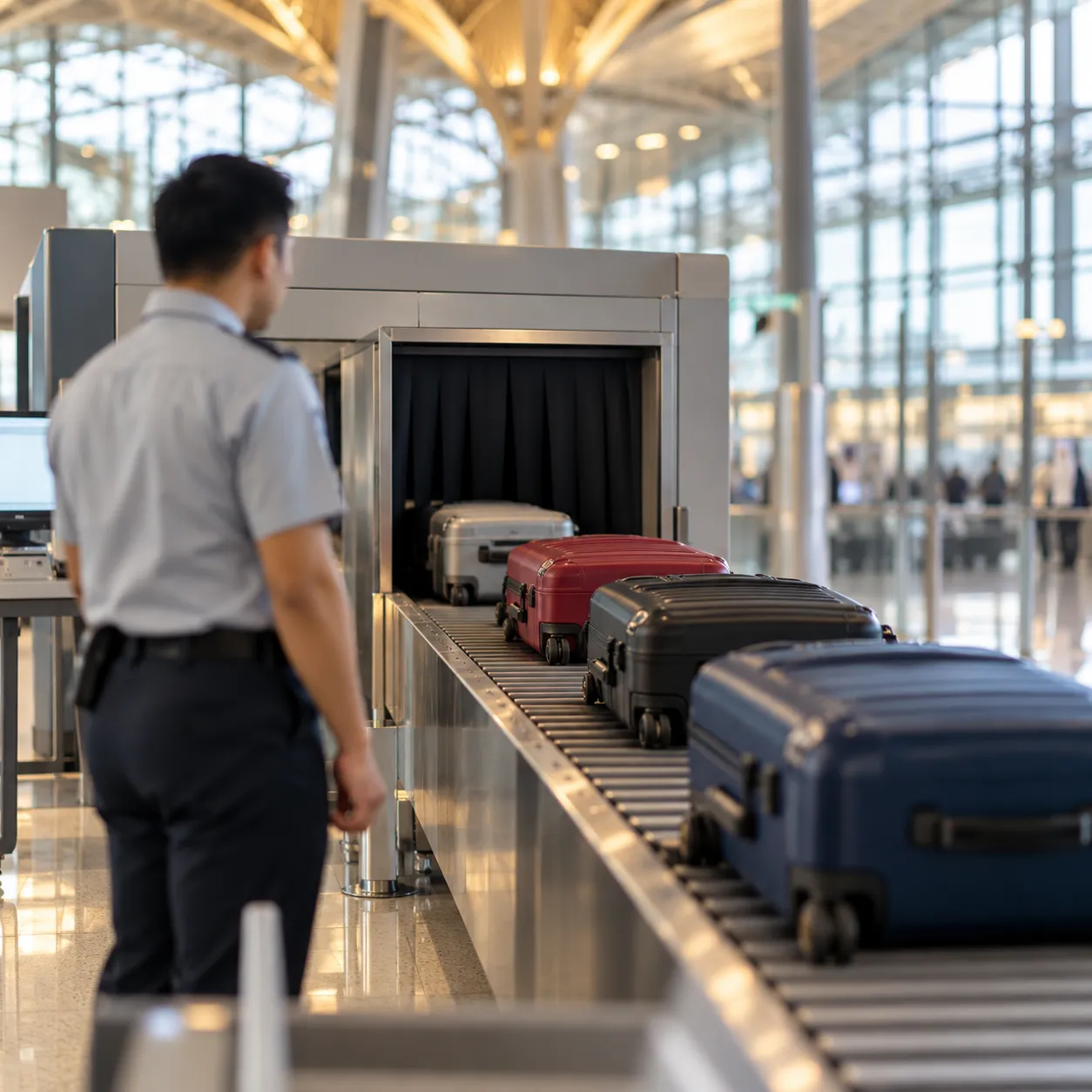
CAAT has framed the update as bringing Thailand's aviation security in line with practices long used elsewhere. According to VisasNews, comparable procedures already operate in Japan, Singapore, South Korea, the United States, and parts of the Middle East and Europe, where screening officers have similar authority to inspect a bag that trips an alert without waiting for the owner to be located. For a country that handled a record run of international arrivals through 2026, closing that procedural gap had become a recurring recommendation in aviation-security reviews, and the Tourism Authority of Thailand has positioned the change as a confidence-building step for the travelers it is courting rather than a new burden on them.
The list of items that can prompt an inspection is narrow and mirrors global norms rather than introducing anything novel: explosives, firearms, flammable aerosols, chemical substances, fireworks, fuels, gas cylinders, corrosive substances, pesticides, magnetized materials, and — the one that catches out the most ordinary travelers — power banks and lithium batteries packed into checked bags instead of carry-on. CAAT's own guidance singles out power banks specifically, since loose lithium cells are a known fire risk in an aircraft hold and are the item most commonly flagged by X-ray screening on ordinary passenger flights, a detail confirmed by Asian Trails alongside its note that bags "will not be routinely opened."
If screening does flag a bag, Thai airports are required to carry out the inspection in a designated area, record it on video, and leave a printed "Notice of Baggage Inspection" inside once it is resealed. Passengers are notified after the fact rather than pulled aside beforehand. Any prohibited item that is found and confiscated is not returned, so CAAT's advice is practical rather than alarmist: pack valuables, fragile items, essential documents, and anything you cannot afford to lose into carry-on luggage instead, and use an internationally recognized TSA-compatible lock so that security staff can open and reseal a bag without damaging it. Passengers with a complaint about how an inspection was carried out can file one directly at complaint.caat.or.th.
For anyone flying in on a property-viewing trip or a one-way move, the practical takeaway is to treat Thailand the way you would already treat a flight to Tokyo, Seoul, or Singapore: keep original title deeds, lease agreements, passports, and signed contracts in a carry-on folder rather than a checked suitcase, charge devices before travel so power banks can stay in your cabin bag, and use a TSA-style lock on any checked case. None of this is specific to the new rule — it is simply good practice that the rule now makes slightly more consequential to ignore. Buyers working with an agency to view units or complete paperwork during a short visit can build this into trip planning when they browse current listings on Siam Keyholder's properties page or reach out through the contact page to coordinate viewing dates around flights.
The timing lands in the middle of Thailand's high season ramp-up, when inbound numbers from the Middle East, China, and Europe typically climb and airports handle their heaviest passenger loads of the year. CAAT and TAT have both framed the update as routine housekeeping rather than a response to any specific incident, and the agencies' own messaging — "checked bags will not be routinely opened" — is meant to reassure rather than alarm returning visitors and relocating residents alike. For a market as reliant on confident, repeat international travelers as Thailand's property and tourism sectors, a transparent, video-recorded, narrowly scoped screening process is a lower-friction way to close a long-standing procedural gap than many alternatives would have been.
**Does Thailand now search every checked bag?** No. CAAT has stated that checked baggage will not be routinely opened. Inspections only happen when X-ray screening or another security check flags a specific item as suspicious or potentially dangerous.
**What should I avoid packing in checked luggage when flying to Thailand?** Power banks and loose lithium batteries, along with valuables, fragile items, and essential documents such as passports or property paperwork, should go in carry-on luggage rather than a checked bag.
**Will I be told if my bag was opened and inspected?** Yes. Inspections take place in a designated area, are video recorded, and a printed "Notice of Baggage Inspection" is placed inside the bag so the passenger is informed after the fact.